
From the website to one continuous tour file.
The review follows the 12-step Sales · 6-step Operations · 5 Accounting task groups and the modules present in the Flamingo demo. The focus is integration and the handover, approval and reconciliation points.
E-commerce/ERP screens are captured from the existing demo UI with record, customer, date, booking and finance data redacted. The AI assistant and three mobile apps are captured from CTC Smart Tech prototypes designed from the Flamingo documentation. Not evidence of acceptance or production performance.
01 · Intake
The B2C website or a B2B request creates input for Sales.
02 · Quote
Normalise the request, build the itinerary, price by supplier and version.
03 · Handover
Customer confirms → check Form 1 and pre-arrival documents.
04 · Operations
Book services, assign guides, track confirmations and COD deadlines.
05 · Tour delivery
Guides update checklists; incidents go to authorised people.
06 · Settlement
Reconcile cash in/out, invoices, variances and post-tour care.
Flamingo e-commerce & ERP
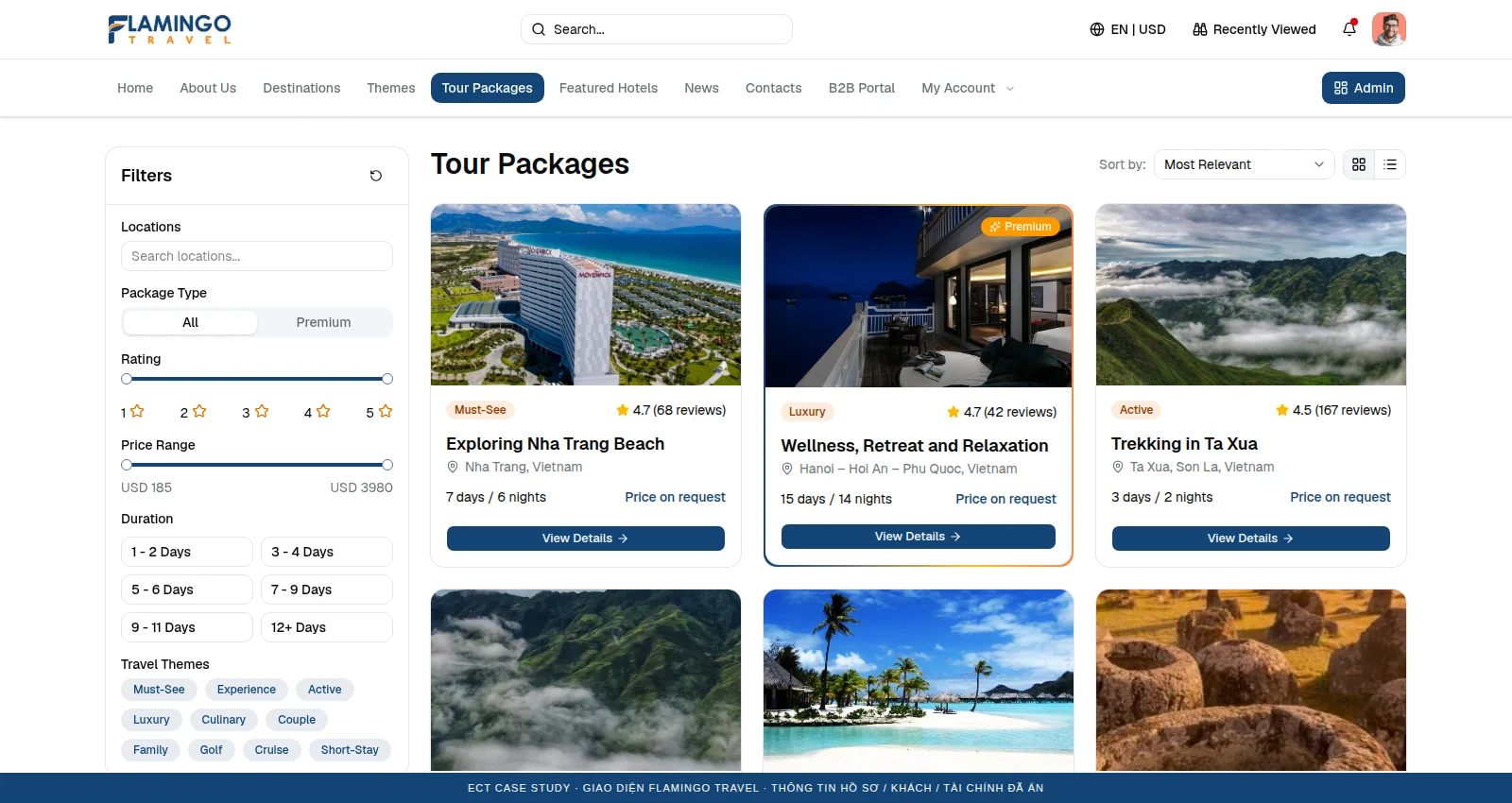
E-commerce & tour sales channel
Customers browse tour products, send requests or start booking; B2C intake is organised for Sales to pick up.
Source screen: /tour-packages · record data redacted; click to enlarge.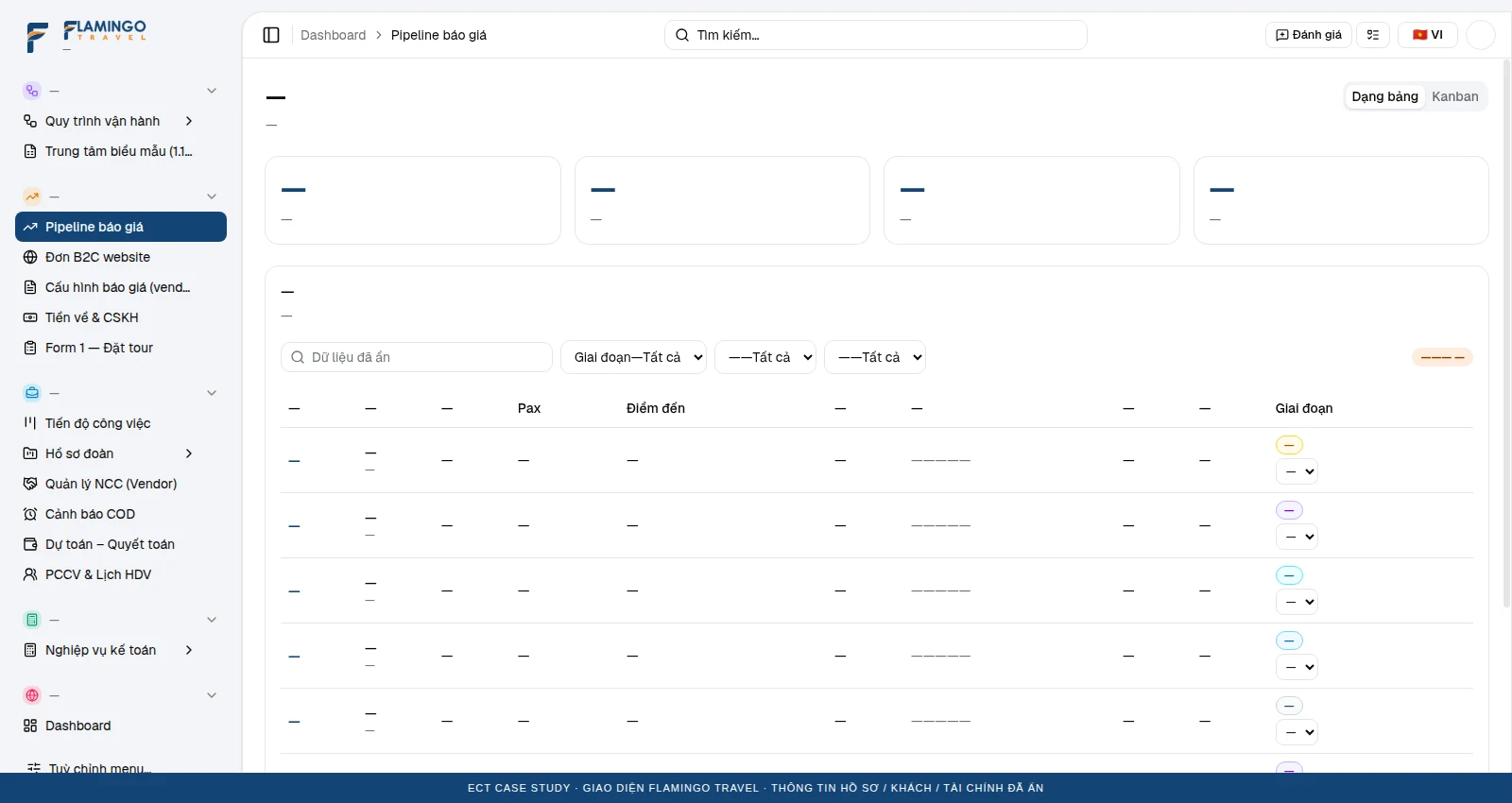
Sales: from request to opportunity
A pipeline tracks quoting stages; customer details and needs flow into the tour file.
Source screen: /dashboard/sales · record data redacted; click to enlarge.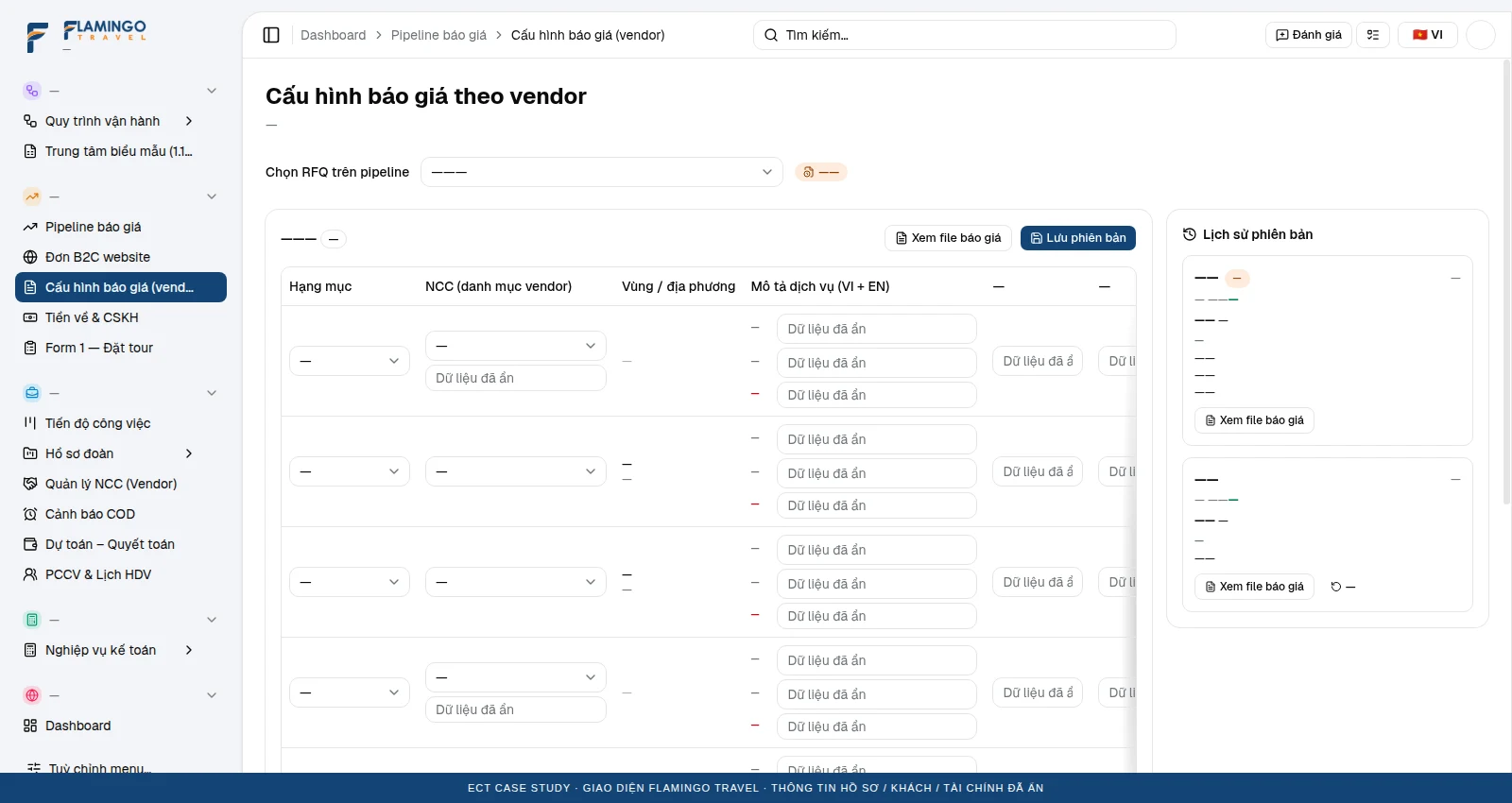
Supplier-based quote builder
Prices computed from services, norms and supplier conditions; versioned, with change explanations before sending to the customer.
Source screen: /dashboard/sales/quotes · record data redacted; click to enlarge.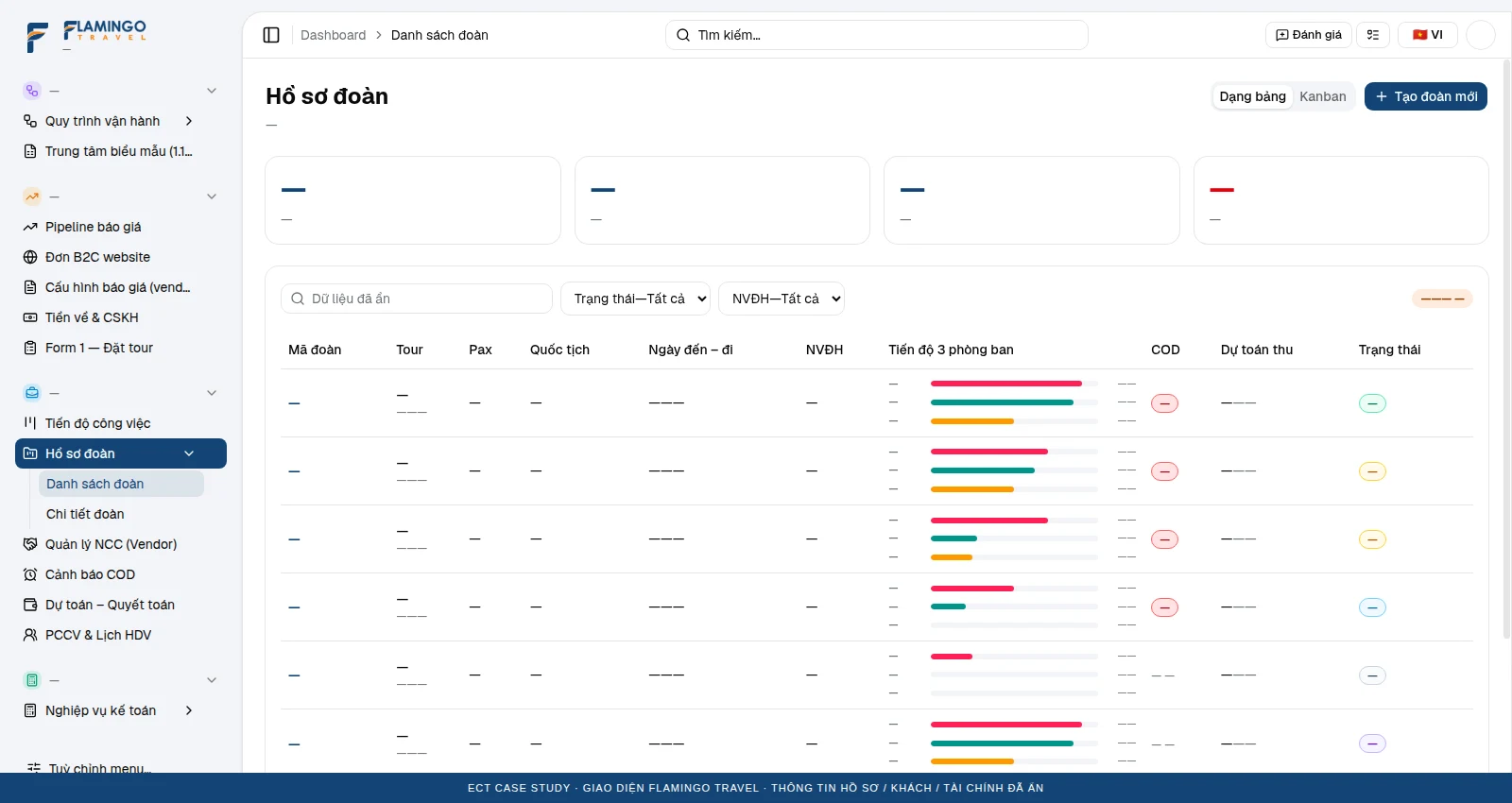
Tour file: the ERP’s connecting point
Tracks Sales–Operations–Accounting per tour; Form 1 handover, service bookings and task progress.
Source screen: /dashboard/ops · record data redacted; click to enlarge.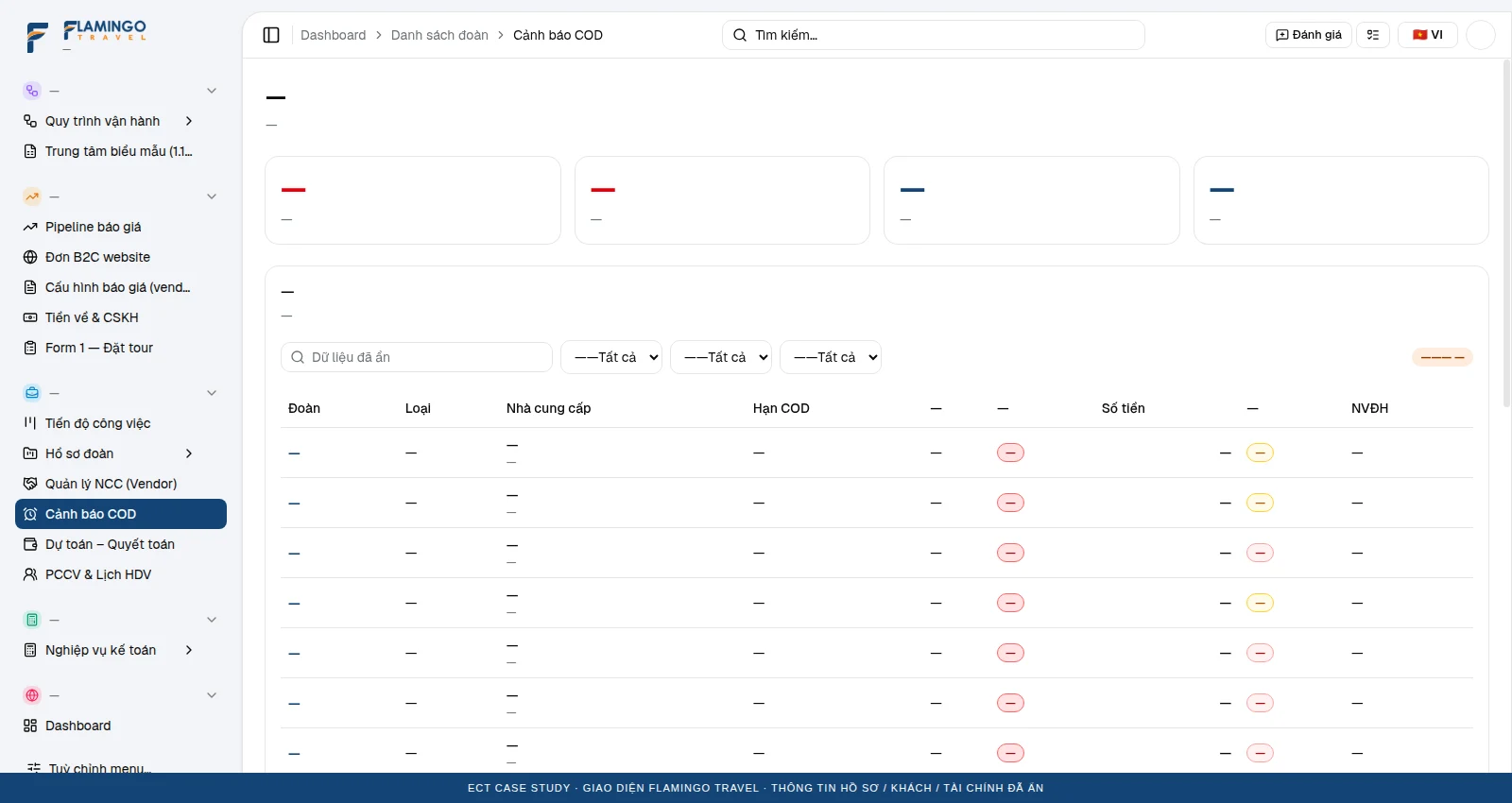
Supplier payment deadline control
Bookings prioritised by COD deadline; service status and cash in/out linked before payment.
Source screen: /dashboard/ops/cod · record data redacted; click to enlarge.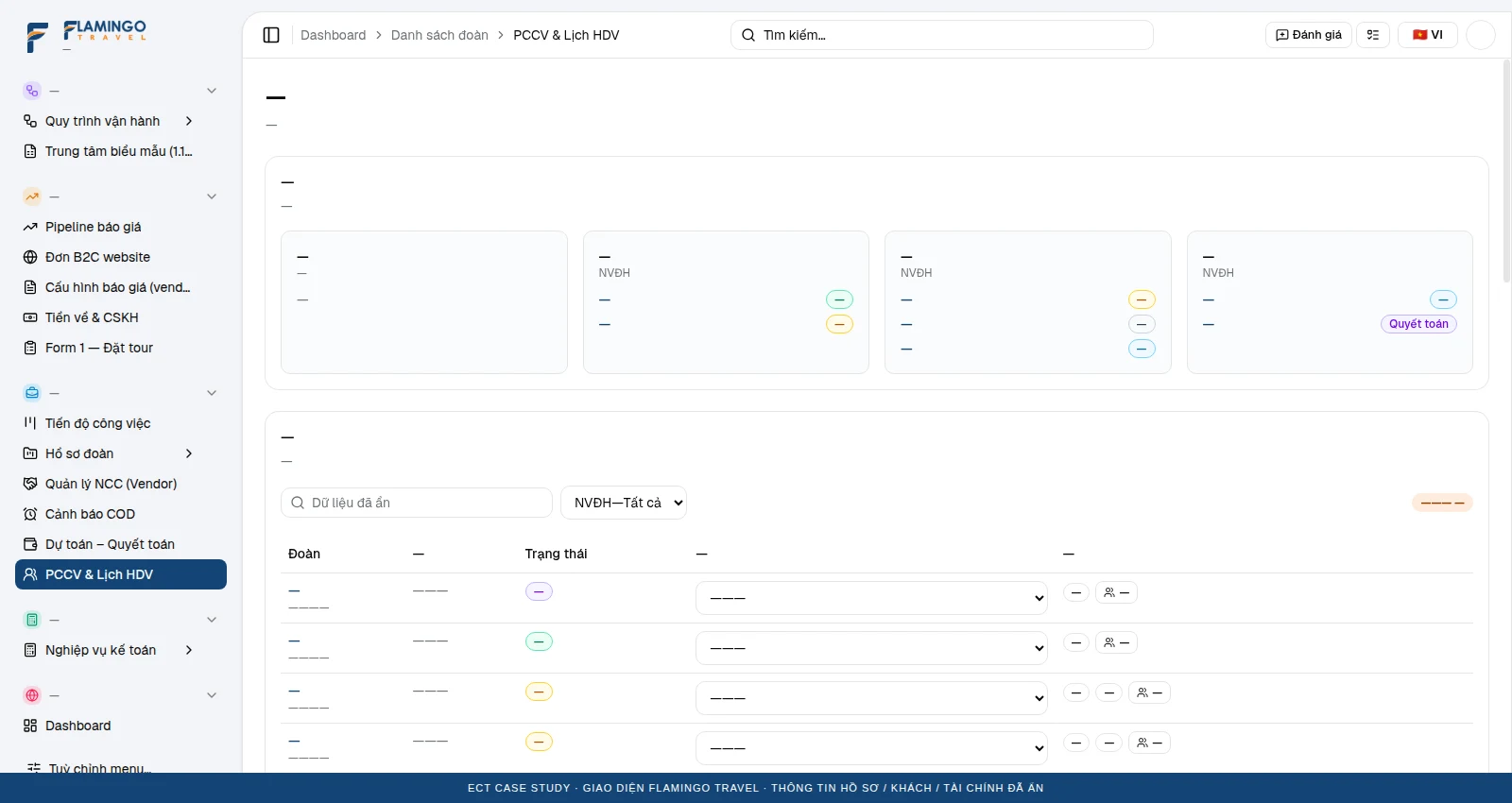
Guide assignment & schedule
Owners and guides organised per tour; the base for pushing work schedules to the field app.
Source screen: /dashboard/ops/assignments · record data redacted; click to enlarge.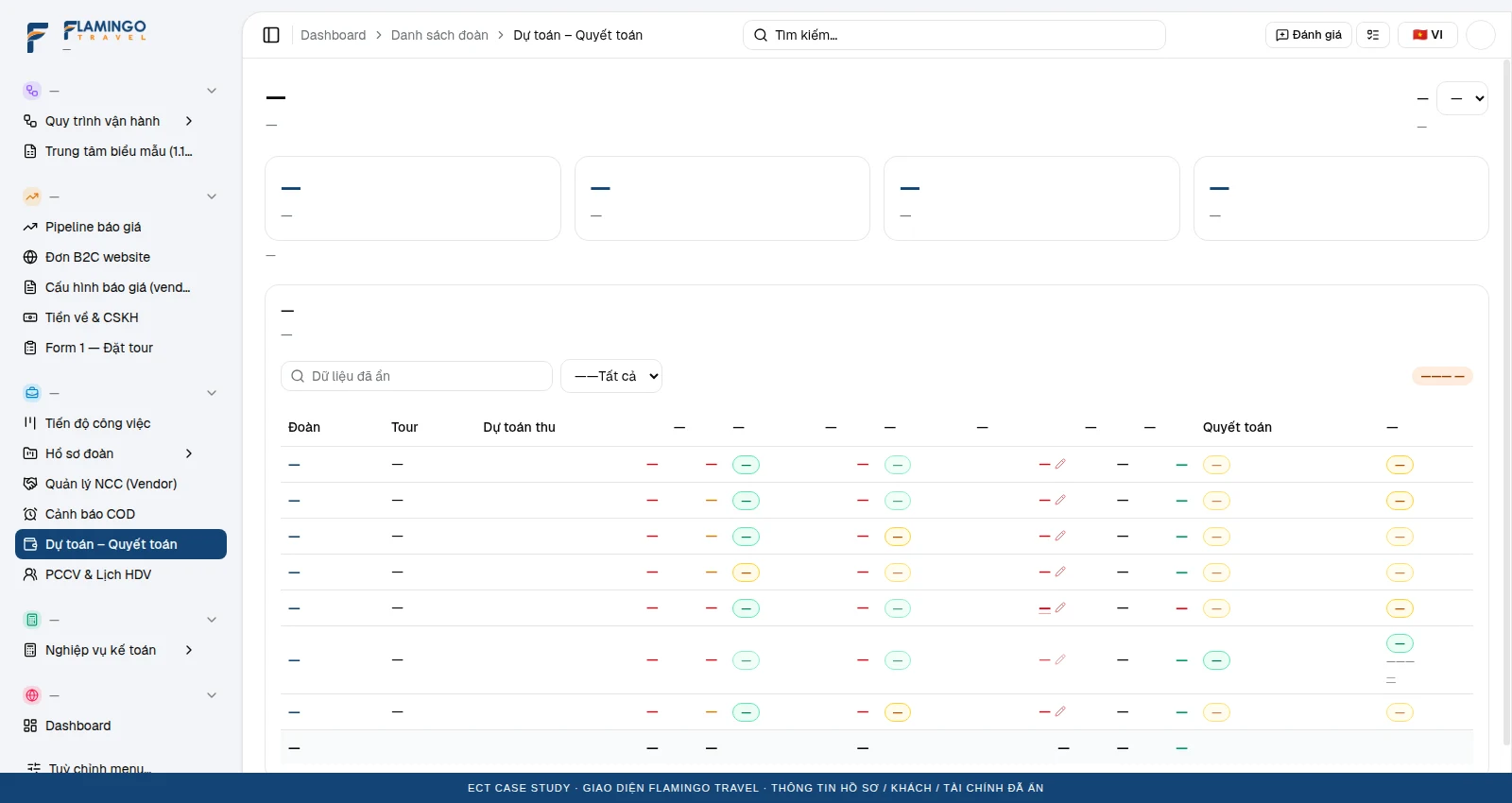
Budget vs settlement
Revenue, cost and incidents reconciled per tour; approvals with owners and variance control.
Source screen: /dashboard/ops/finance · record data redacted; click to enlarge.Sourced price checks.
Human-approved suggestions.
The Flamingo POC focused on standardising transport & meal price lists and checking norms and applicable conditions. An extended assistant can summarise tours, remind COD deadlines and support staff from the same ERP data.
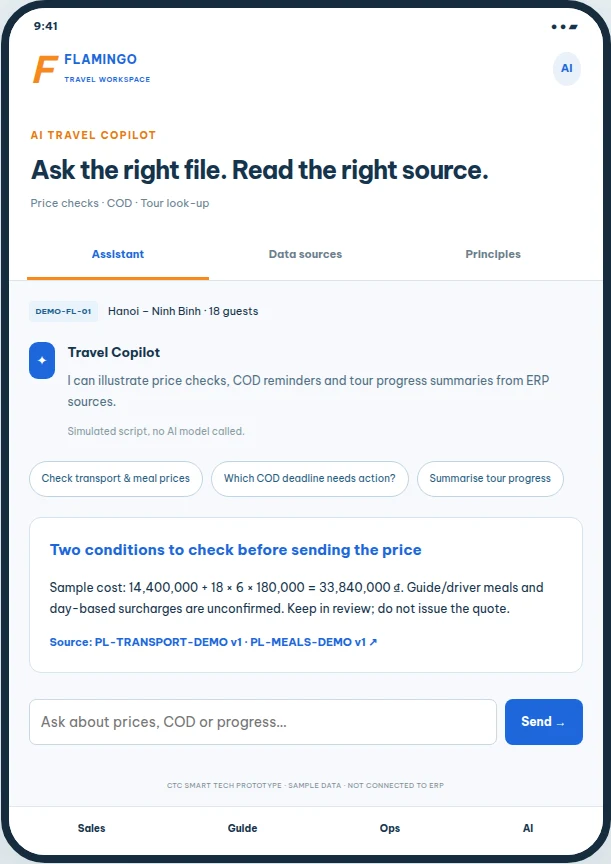
Sample scenario: compute costs, flag missing conditions, cite the versioned price list and keep quote sending with Sales.
Open the sample assistant ↗Same ERP.
Everyone sees exactly what to do.
We propose focused module apps on the same ERP APIs and tour codes. Each app has its own business scope, access rights and handover point; the desktop menu is not copied to the phone.
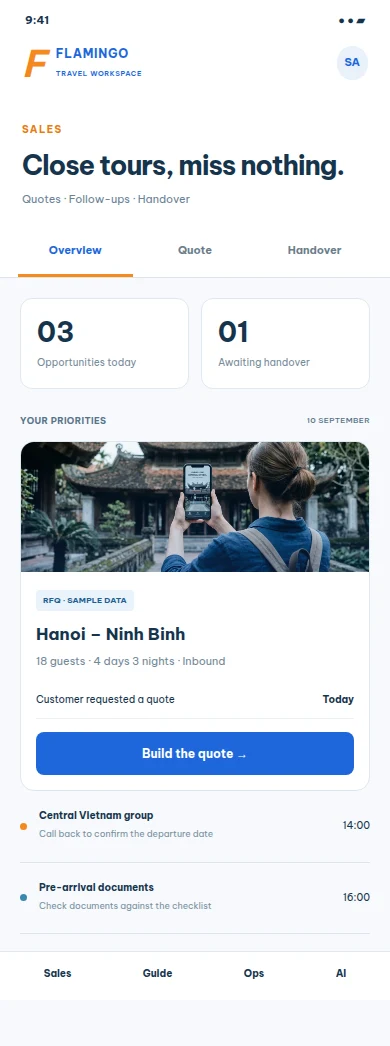 FROM OPPORTUNITY TO HANDOVER
Sales app
- Today’s opportunities and follow-ups.
- Draft quotes with versions and service conditions.
- Closing checklist; Form 1 handover to Operations.
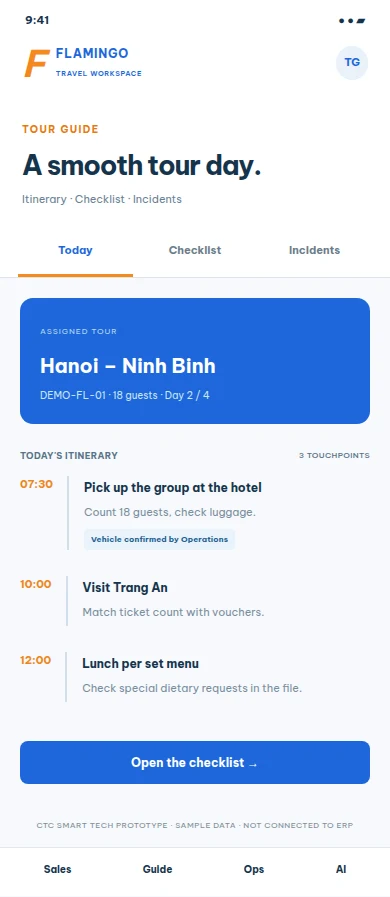 ON SITE WITH THE GROUP
Tour guide app
- Assigned tours, daily itinerary and required service details.
- Pick-up, headcount and voucher checklist with completion confirmation.
- Incident reports with descriptions; track Operations’ response.
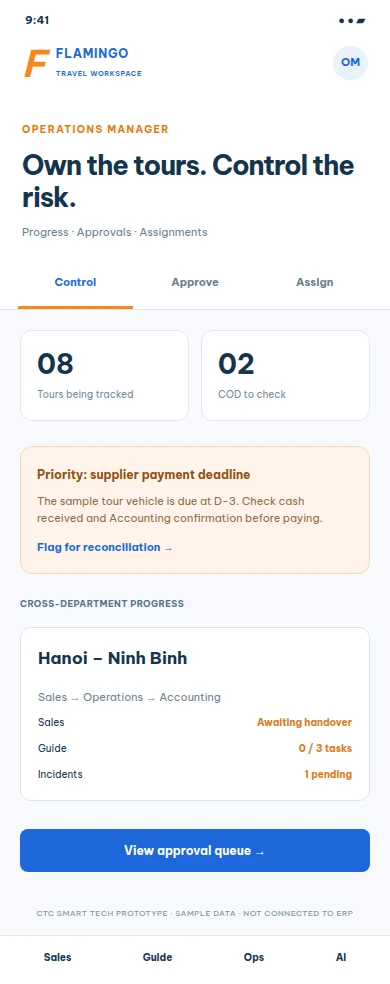 PRIORITISE WHAT NEEDS A DECISION
Operations manager app
- Overview of running tours, unconfirmed bookings and upcoming COD deadlines.
- Incident approval queue with basis and recorded reasons.
- Assign guides, coordinate resources and track handovers.
Module & permission mapping
| Role | Inherited ERP module | Permission boundary |
|---|---|---|
| Sales app | RFQ pipeline → Quote builder → Form 1 → Tour file | Sales view/edit their opportunities and prepare handover; they do not confirm cash received or approve spending. |
| Tour guide app | Assignments / guide schedule → Tour itinerary → Checklist → Incidents | Access only to assigned tours and customer-service data; no margins or company-wide settlements. |
| Operations manager app | Tour file → COD → Incident approval → Assignments | Approves within limits and scope; Accounting still confirms cash in/out and documents. |
Sales save a quote and complete the handover checklist → the guide records tasks / reports an incident → the manager reviews with a reason → status updates in the same demo browser. Production needs server-side permission checks, logs, conflict handling and cross-device sync.
Roadmap from the identified business processes
Data foundation
Standardise tour codes, supplier catalogue, price lists, permissions and rules.
Price-check pilot
Transport & meals: extract → check conditions → compute by rules → human approval.
ERP & sales channel
Persistent data; RFQ/B2C → Form 1 → operations → reconciliation.
Role-based apps
Permissioned APIs, push notifications and sync for Sales, guides and managers.
AI & multichannel
Sourced look-ups, reminders and controlled suggestions; measure quality before granting write access.
Acceptance criteria include: website intake lands in the right Sales queue; Form 1 is handed over only when complete; COD alerts on time; incidents reach the right approver; guides cannot read data outside assigned tours; actions and data versions are traceable.
Research sources: Flamingo web-app source code, workflow data extracted from the Sales–Operations–Account documentation, the AI Automation design and the POC proposal. This document describes the solution and does not publish contract prices or real customer data.